


My granddaughter has asthma and woke up coughing every time she slept over. Our basement guest room sat at 78% humidity — I checked. Four days after plugging this in it read 52%, and two weeks later she slept the whole night downstairs with no coughing. I should have bought this one first instead of the three units that came before it.
Linda T. — Cincinnati, OH

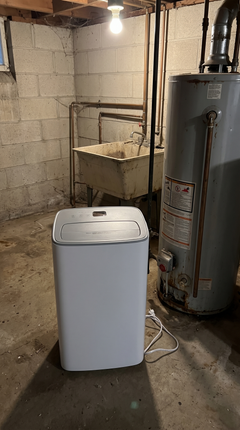
I carried buckets up the basement stairs twice a day for two years. Connected the DryHaven's hose to my sump pit in about five minutes — standard fitting, no tools. It has now run six weeks straight without me touching it once. The tank-and-bucket era of my life is over.
Mark H. — Pittsburgh, PA

This is my third dehumidifier in five years. The first two were rated for 4,500 square feet and could not hold my 900 square foot basement below 65%. This one took it to 50% in under a week and the musty smell my wife was embarrassed about was gone before Thanksgiving. The difference is real capacity, not box-label capacity.
Ray S. — Grand Rapids, MI
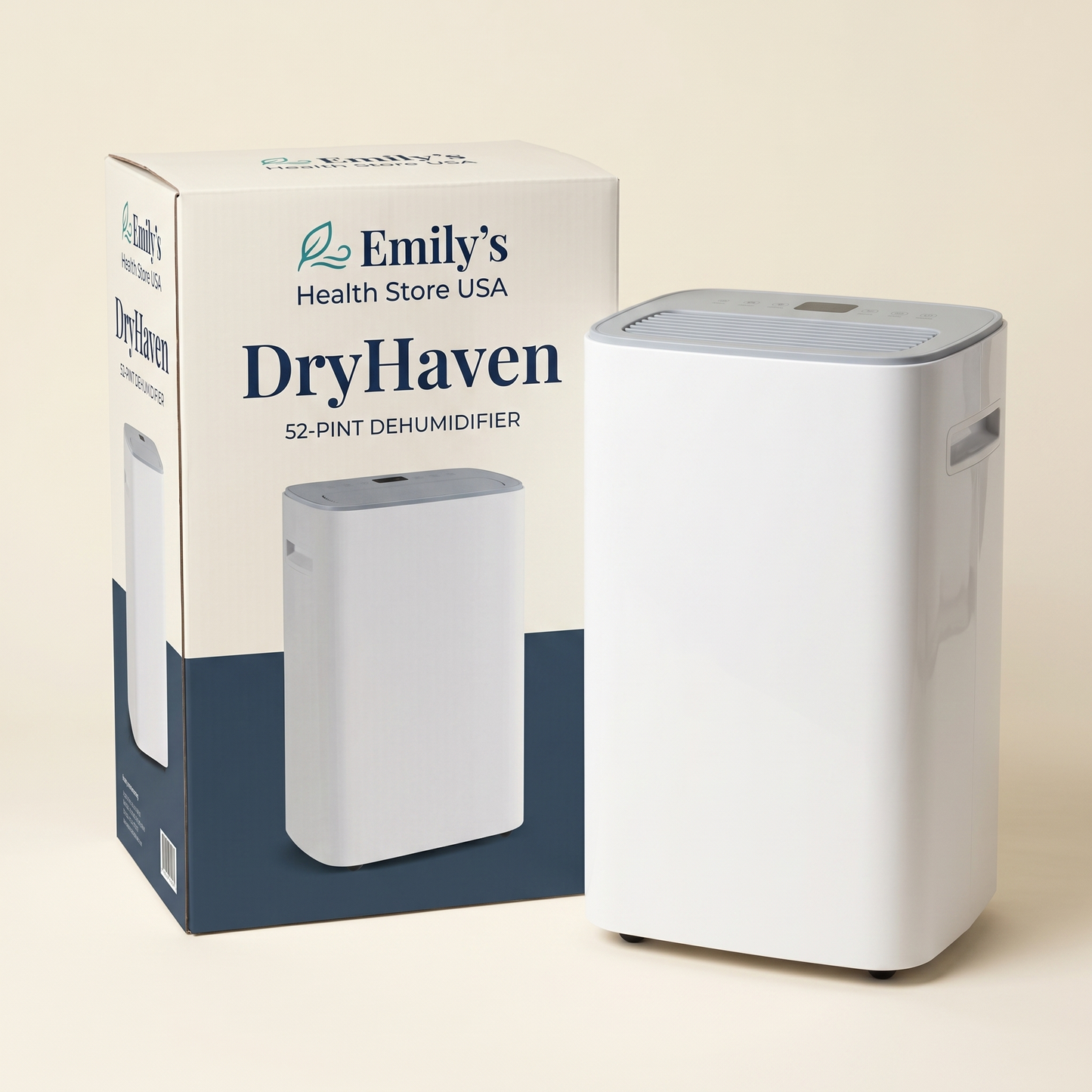
DryHaven - 52-Pint Dehumidifier for Home and Basement with Auto Drain
DryHaven - 52-Pint Dehumidifier for Home and Basement with Auto Drain
IN STOCK — SHIPS WITHIN 1 BUSINESS DAY
Pulls up to 52 pints a day. Drains itself through a hose. You never carry a bucket again.
Regular price
$381.95
Regular price
$649.95
Sale price
$381.95
Unit price
per
Couldn't load pickup availability
Spring humidity is already in your basement. Get it by Wednesday, 17. Jun.
- 52 Pints a Day. Real Capacity.
- Hook Up the Hose. Forget the Buckets.
Product Details
Product Details
- Dehumidification Capacity: 52 pints/day at 95°F/90% RH | 40 pints/day at 86°F/80% RH | 15.5 pints/day at 65°F/60% RH
- Humidity Range: Set your target anywhere from 30% to 80% RH
- Drainage: Continuous gravity drain via included 3.3-ft hose, or 0.66-gallon tank with auto shutoff
- Modes: Dehumidify / Dry Clothes / Continuous
- Auto Defrost: Internal frost protection for cold basements — prevents the freeze-up failure that kills cheap units
- Noise Level: Under 46dB — quieter than a refrigerator
- Power: 174W input — measured, not marketing
- Voltage: 120V / 60Hz — any standard US outlet
- Timer: 24-hour programmable auto on/off
- Dimensions: 12.5 x 9 x 19 inches
- Weight: 32 lbs on smooth universal wheels with recessed handles
- Filter: Washable, reusable — no replacement costs
- Safety: Child lock, water-full auto shutoff, DOE certified
In the Box: 1x DryHaven Dehumidifier, 1x 3.3-Foot Drain Hose, 1x Washable Filter, 1x User Manual
Shipping & Delivery
Shipping & Delivery
Ships from the USA – Our orders ship from US fulfillment warehouses in California, Illinois, and New Jersey, based on the closest distribution center to your address.
📦 Order Processing – 1-2 business days from order placement.
🚚 Shipping Time – 3-5 business days from ship date via FedEx Ground or OnTrac (carrier selected by route).
📍 Free Shipping – Continental US, all orders.
📩 Full Tracking Included – You will receive an automatic tracking email the moment your order ships, with delivery updates along the way.
Questions before it arrives? Just reach out.
Emily's 30-Day Dry or It's Free Guarantee
Emily's 30-Day Dry or It's Free Guarantee
🛡️ Emily's Promise – If the DryHaven doesn't dry your basement the way we say it will, we'll make it right. Simple as that.
📦 Hassle-Free Returns – Contact us within 30 days and we'll guide you through every step. No runaround, no fine print.
📩 Real Human Support – You'll talk to a real person, not a bot. Every time.
For complete details, see our Return & Refund Policy or reach us directly.
My granddaughter has asthma and woke up coughing every time she slept over. Our basement guest room sat at 78% humidity — I checked. Four days after plugging this in it read 52%, and two weeks later she slept the whole night downstairs with no coughing. I should have bought this one first instead of the three units that came before it.
Linda T. — Cincinnati, OH
I carried buckets up the basement stairs twice a day for two years. Connected the DryHaven's hose to my sump pit in about five minutes — standard fitting, no tools. It has now run six weeks straight without me touching it once. The tank-and-bucket era of my life is over.
Mark H. — Pittsburgh, PA
This is my third dehumidifier in five years. The first two were rated for 4,500 square feet and could not hold my 900 square foot basement below 65%. This one took it to 50% in under a week and the musty smell my wife was embarrassed about was gone before Thanksgiving. The difference is real capacity, not box-label capacity.
Ray S. — Grand Rapids, MI
Scroll to...
📋 What's Included
⭐️ Customer Reviews
❓ FAQ


Real Homeowners. Real Dry Basements.


You bought the $149 unit. You emptied its tank twice a day. You watched it freeze up and die in its second summer.
None of that was your fault. Here is why the DryHaven is the dehumidifier you should have been sold the first time.
4 Reasons This One Actually Keeps Up


Thousands of Basements Back in Service
Over 1,800 verified homeowner reviews — and counting.

Built Without Compromise
Built to Outlast the Cheap Ones
Cheap dehumidifiers are built down to a price: undersized coils, thin steel, a compressor that runs flat-out until it quits. The DryHaven is built the other way — heavier coil mass, an oversized compressor for its class, and internal frost protection against the freeze-up that ends most units inside two summers. Homeowners report theirs running daily into a third year with no drop in performance.
This is not a one-summer appliance. It is the one you stop thinking about.

Hook Up the Hose. Walk Away.
Set your target humidity once — say, 50%. Connect the hose to a floor drain, sump pit, or utility sink. The DryHaven monitors the air, cycles on when humidity climbs, drains itself by gravity, and shuts off when the job is done. No buckets. No babysitting. Homeowners check on theirs out of curiosity, not necessity.
These homeowners were exactly where you are right now.
On their second or third dehumidifier. Tired of buckets, smells, and coverage claims that did not hold. Here is what happened when they tried one more.

"My granddaughter sleeps downstairs again."
"For two years she woke up coughing every time she slept in the basement guest room, and my daughter quietly stopped letting her stay over. The DryHaven took that room from 76% humidity to 51% in five days. Last month she stayed three nights in a row. Not one cough. I would have paid triple."
Cleveland, OH

"After the flood, this dried us out in five days."
"Sump pump failed in April and we took on water. The restoration quote to dry the basement was $2,800. I bought this instead, set it to Continuous mode, hooked the hose to the sump pit, and let it run. Floor and drywall were dry in five days. The insurance adjuster asked me what company I used."
Cedar Rapids, IA

"78% to 50% in four days. I checked twice."
"I keep a hygrometer in the family room because I stopped trusting dehumidifier marketing two units ago. This one took the room from 78% to 50% in four days and has held it there since March. The damp-cave smell my kids teased me about is gone, and we actually use the room now. The numbers do not lie."
Louisville, KY
Real Reviews From Real Homeowners
★★★★★
Customer Photos
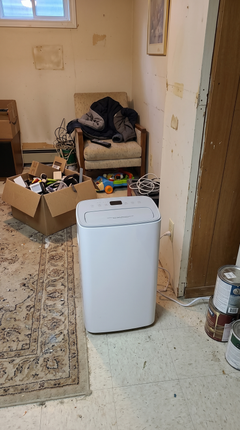
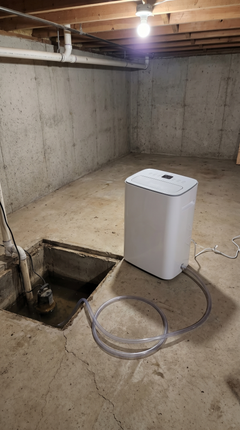
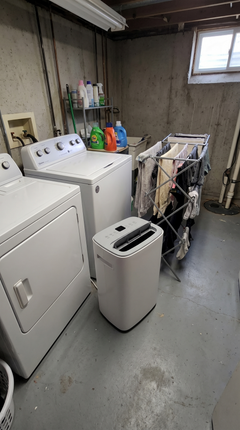
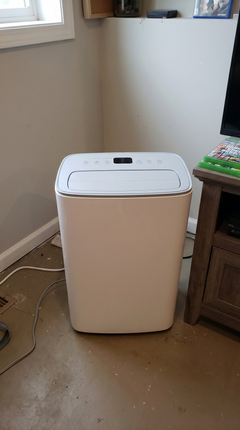
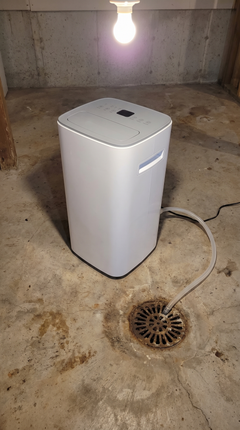
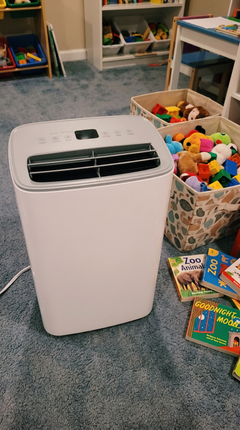
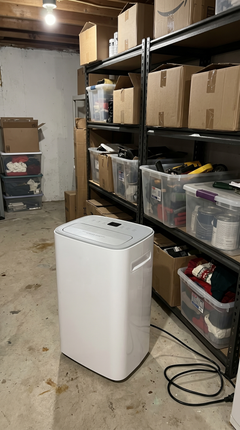
★★★★★
The drain hose is the feature that changes everything
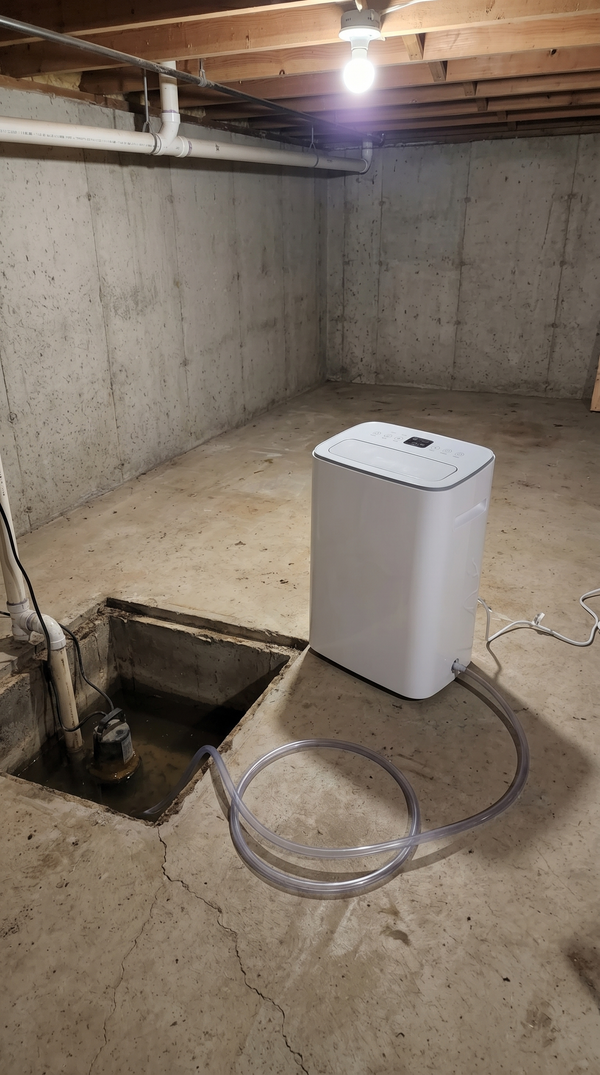
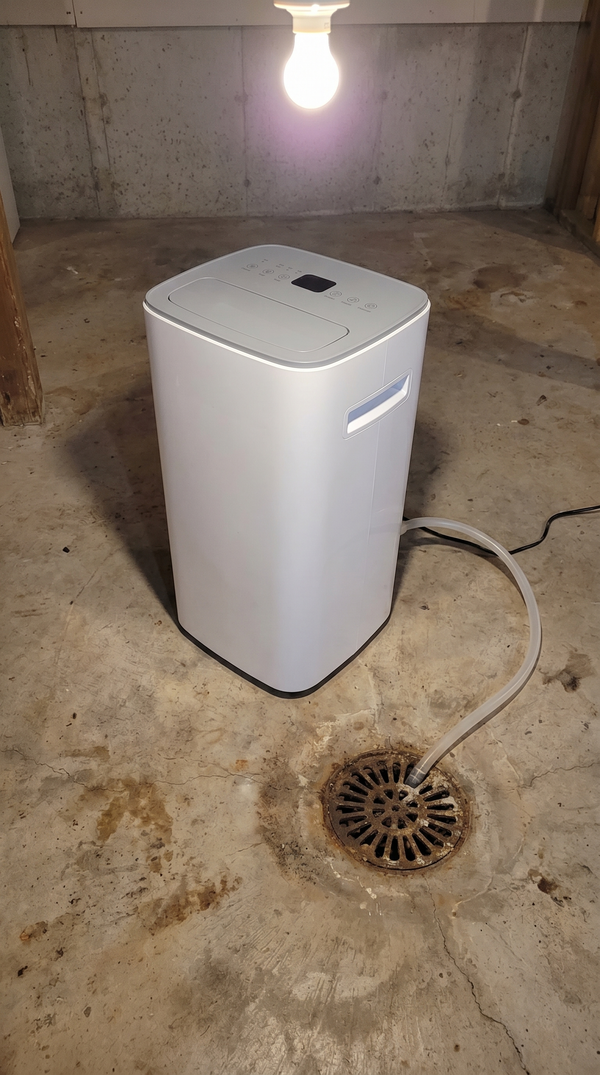
My last dehumidifier filled its tank every five hours. I was emptying it before work and the second I got home — for two years. The DryHaven came with a 3.3-foot hose that threads on like a garden hose. I ran it to the floor drain, set the humidity to 50%, and have not touched the unit in seven weeks. The basement reads 49-52% every time I check. It pulls hard when the spring rain hits, cycles off when the air is dry, and the 0.66-gallon tank with auto shutoff is there as a backup if I ever move it somewhere without a drain. No buckets. That alone is worth the price difference over the box-store units.
★★★★★
UPDATE: third spring with this unit — still holding 50%
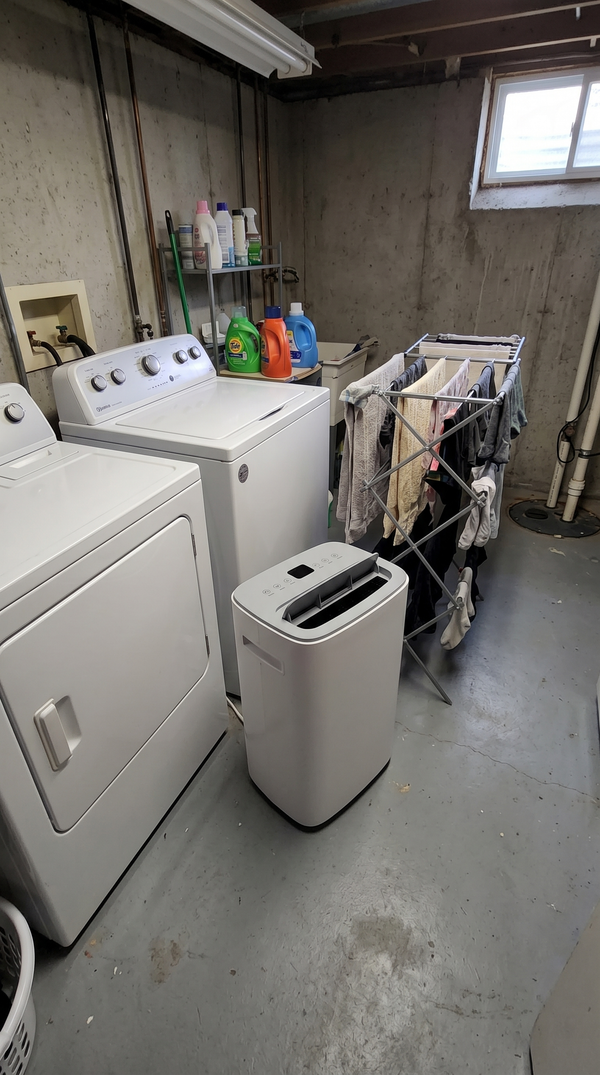
Original review (April 2024): 850 sq ft basement at 79% RH. Within a week the DryHaven had it at 52%. Hose runs to the sump pit. Set and forgot. 1-year update: Ran through two full humid seasons. Auto defrost kicked in through the cold months — no freeze-ups, which is what killed my last two units. This spring: Still holding 48-52% on the same setpoint. Washed the filter maybe six times total — rinse, dry, done. My previous unit died at month 19. This one is starting its third season like day one. The build difference is not marketing.
★★★★★
HVAC contractor for 22 years — the coil mass and auto defrost are what set this apart
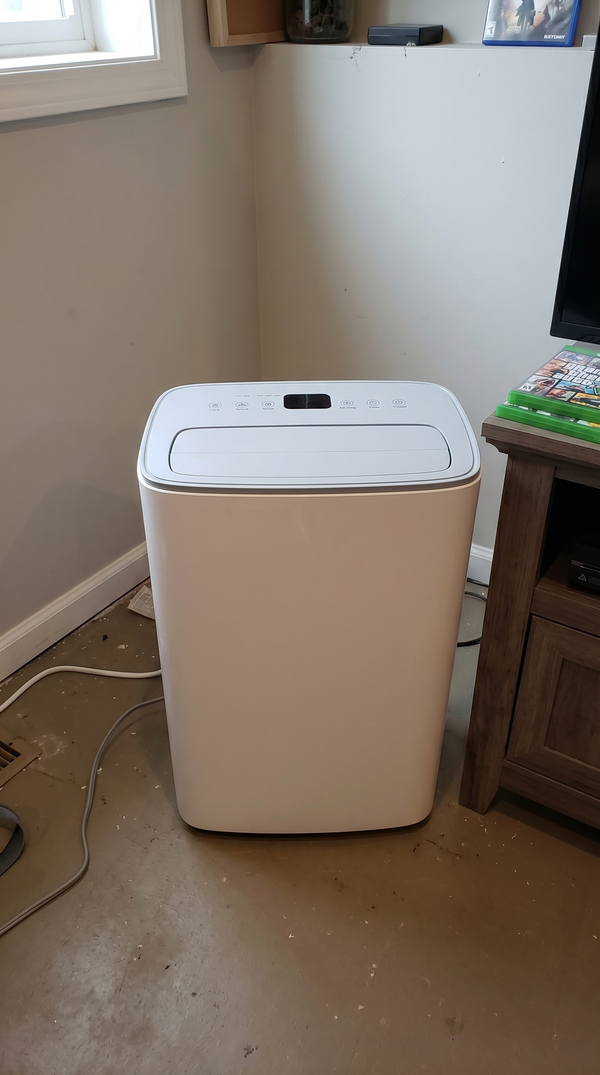
I install dehumidification systems professionally and I evaluate consumer units before recommending them to clients. The failure mode on $150 units is predictable: undersized coils ice over in a cool basement, the compressor runs against the frost, and the unit dies inside two summers. The DryHaven's auto defrost senses coil temperature and cycles correctly — I verified it in a 61°F basement. That alone changes the lifespan math. The pint ratings are honest. 15.5 pints/day at 65°F/60% RH is printed right on the spec sheet — that is the realistic basement number, not just the 95°F lab number. A company that publishes its real-condition rating is a company I will recommend. Four clients this spring. Zero callbacks.
★★★★★
The musty smell my guests pretended not to notice is gone
Our basement family room embarrassed me for years. Guests would come down for game night and I would watch them notice the smell and politely say nothing. Candles, sprays, two different dehumidifiers — the smell always came back within days. The DryHaven held the room below 55% for the first time since we finished the basement. By the end of week two the smell was simply gone. Not masked. Gone. We hosted my husband's whole family at Easter and I did not think about the basement smell once. If you know, you know.
★★★★★
Measured everything. Here are the numbers.
Engineer. I measure things. 820 sq ft basement, starting condition 77% RH at 64°F. - Day 1: 77% to 68% - Day 3: 59% - Day 5: 52%, setpoint reached - Held 48-53% for 60 days since Water removal in week one: tank equivalent of roughly 28 pints/day in real basement conditions — consistent with the published 65°F/60% rating curve, scaled for my humidity. Power draw at the wall: 171-178W running, matching the 174W spec. At 10 hrs/day average duty cycle that is about $9/month at my rate. My old unit ran 24/7 and never got below 65%. Noise: 44-46dB measured at 3 feet. The data is clean. Buy it.
★★★★★
My son's asthma flare-ups stopped tracking with rainy weeks
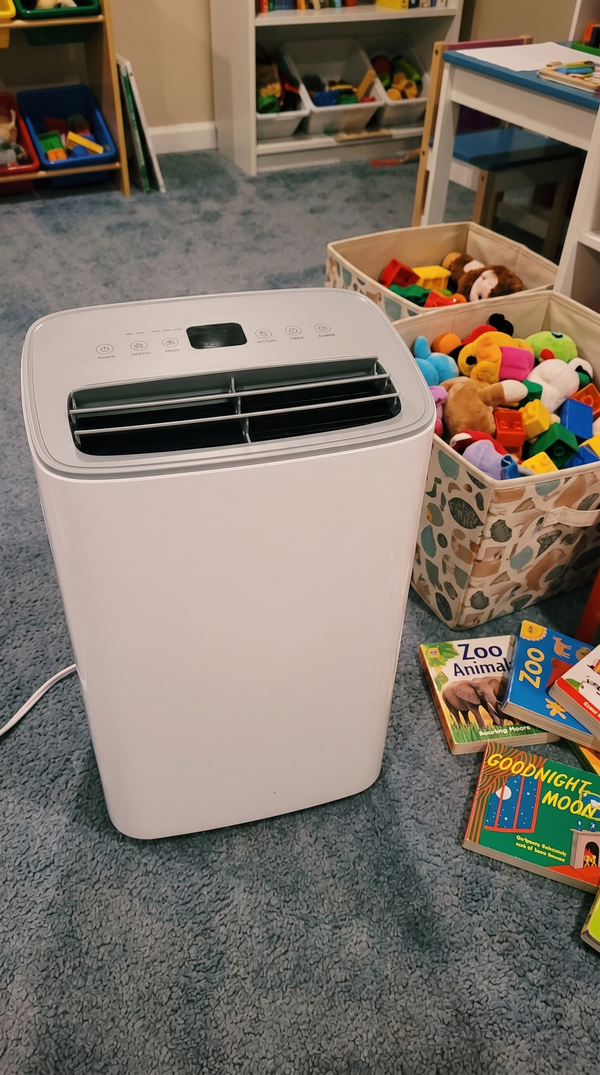
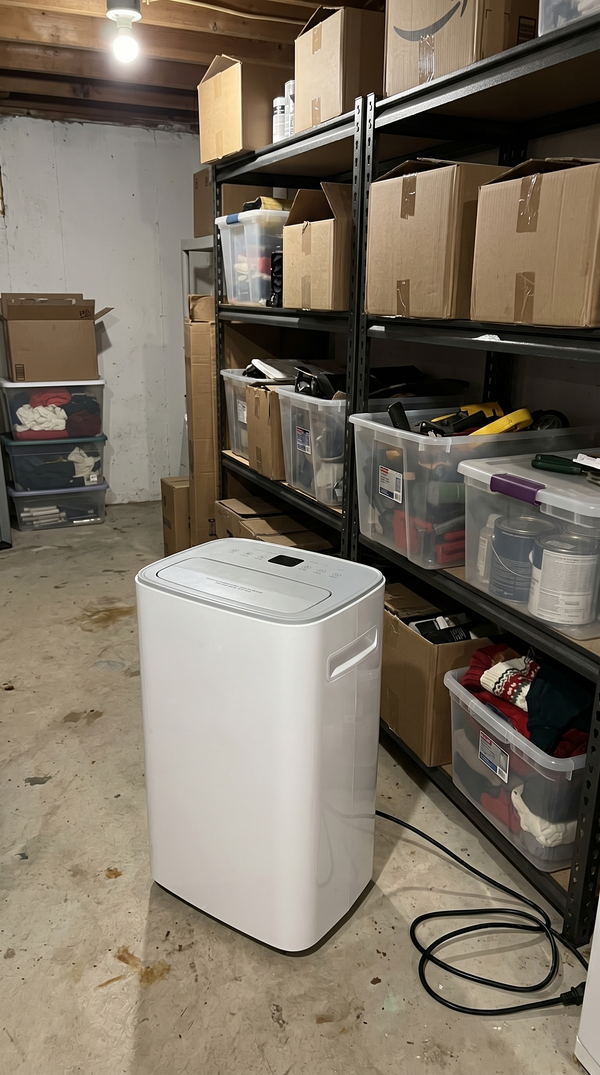
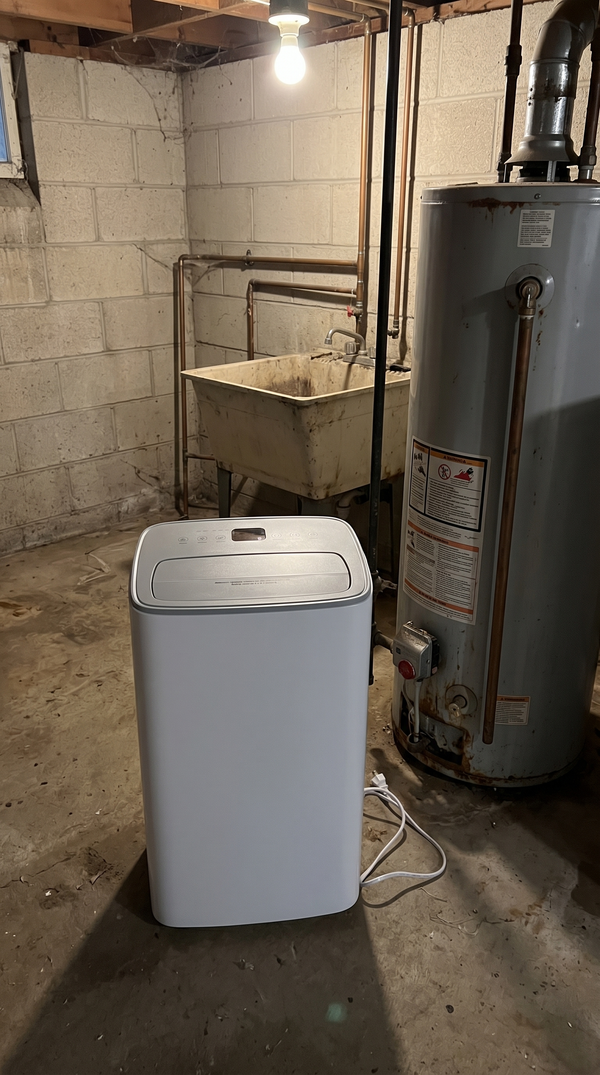
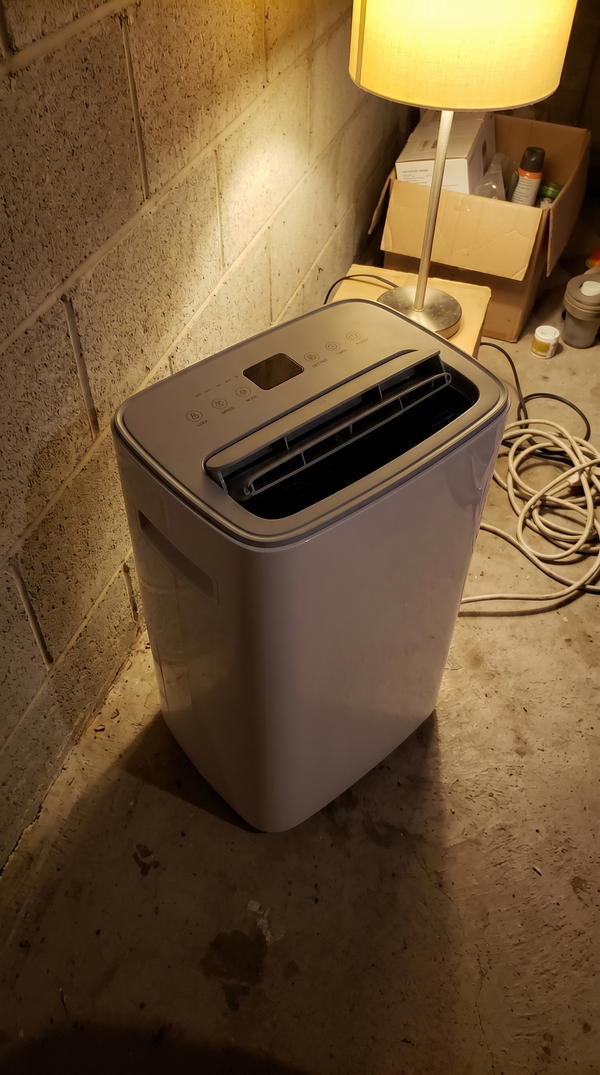
Our pediatric pulmonologist asked us to keep indoor humidity between 40-50% because dust mites and mold spores spike above 60%. Our basement playroom sat at 72%. The DryHaven holds it at 47%. I set the target once and it cycles on its own. After about three weeks we noticed his rescue-inhaler use stopped spiking after rainy stretches — the pattern we had been seeing for two years. The washable filter matters to us too: I can see it is clean instead of trusting a cartridge. The child lock means his little sister cannot reprogram it, which she absolutely tried. For parents managing a kid's airway health, humidity control is not optional. This unit makes it automatic.
Verified Reviews Only
To ensure authenticity, you must be logged into your account to write a review. We verify all reviews against purchase history.
Sign In to ContinueHere is the honest answer most brands will not give you: coverage numbers on every dehumidifier box are measured in laboratory conditions — around 60% humidity and 70°F — that almost no real basement has. A genuinely damp basement at 80% humidity needs roughly twice the rated coverage to reach comfortable levels. That is why your last unit "rated for 4,500 sq ft" could not hold an 800 sq ft basement. The DryHaven publishes its real-condition rating right on the spec sheet — 15.5 pints/day even at 65°F and 60% RH — and its commercial-class compressor and coil mass are sized so a typical 600-1,200 sq ft damp basement reaches and holds 45-55% humidity. For most homeowners reading this, that is exactly the job it was built for. And if it does not pull your basement below 55% within 30 days, the guarantee refunds you in full.
Really. The included 3.3-foot hose threads onto the drain port with a standard garden-hose style fitting — no tools. Route it to anything lower than the port: a floor drain, sump pit, or utility sink. Gravity does the rest, continuously, for as long as the unit runs. Most homeowners hook it up once in spring and do not touch the unit until fall. If you place it somewhere without a drain, the 0.66-gallon internal tank takes over, and a water-full auto shutoff stops the unit before anything can overflow — your floors are protected either way.
Yes — this is one of the core design differences from utility-grade units. The DryHaven runs under 46dB, which is quieter than a typical refrigerator and well below conversation volume. It can live in a family room, guest bedroom, or home office without announcing itself. Customers watch TV, take work calls, and sleep in the same room it runs in. Two fan speeds let you drop it even lower at night, and the 24-hour timer can schedule heavy operation for hours when nobody is downstairs.
What you experienced is the single most common dehumidifier failure, and it is a design flaw, not bad luck. In a cool basement — anything below about 65°F — undersized coils ice over, the compressor labors against the frost, and the unit dies inside two summers. The DryHaven has internal auto defrost: it senses coil temperature and runs automatic defrost cycles, so it keeps pulling water in cool basement air instead of icing up. Combined with heavier coil mass and an oversized compressor for its class, this is specifically the machine built to survive the conditions that killed your last one.
The DryHaven draws 174W of input power — about the same as two ceiling fans. At typical US electricity rates, running 10-12 hours a day costs roughly $9-12 per month. And here is the part the cheap units hide: because the DryHaven actually reaches its humidity setpoint, it cycles off and stops drawing power. Underpowered units never reach their target, so they run 24/7 — homeowners regularly report those adding $30-50 a month while still failing at the job. Doing it right is cheaper than failing continuously.
The smell is mold and mildew metabolizing in damp air — which is why candles, sprays, and DampRid buckets never fixed it. They mask the symptom; they cannot dry the cause. Once the DryHaven pulls your basement below 55% humidity — typically within the first 4-7 days — mold and mildew stop actively growing, and the smell fades on its own over the following one to two weeks. Most homeowners report the basement smelling neutral by the end of week two, permanently, as long as humidity stays controlled. If the smell is not gone, our guarantee is blunt about it: smell, or your money back.
Your Questions, Answered Honestly.
You have probably been burned by a dehumidifier before. So we are going to be straight with you.
Still Have Questions? Talk to Us.

The next heavy rain is coming. Your basement already knows.
You can keep emptying buckets and lighting candles. Or you can install the appliance that quietly fixes this — once, for good. Set it, hook the hose, and take your basement back. Protected by Emily's 30-Day Dry Basement Guarantee.